
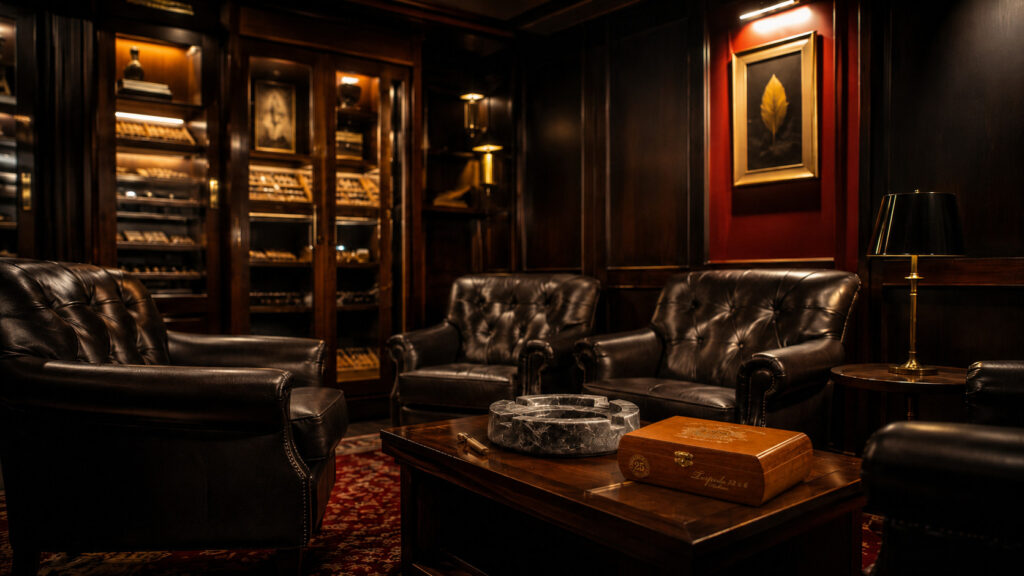
Nobody hands you a card at the door. That is the whole difficulty with cigar lounge etiquette, a set of expectations that are real, widely shared, and almost never written down anywhere a newcomer would find them. Walk into a good lounge for the first time and you will notice within about ninety seconds that there are rules, because everyone else is clearly following them. What follows is the version somebody should have given you on the way in: what the customs are, where they came from, and which ones actually matter versus which are just the preferences of whoever is loudest in the corner.
Quick Answer: Cigar lounge etiquette comes down to a handful of habits: buy your cigar from the lounge rather than bringing your own, or pay the cutting fee if outside cigars are allowed; never ask to smell or touch another person’s cigar; do not stub a cigar out, let it rest and go out on its own; keep your ash off the floor and your smoke out of your neighbor’s face; take phone calls outside; do not comment on what anyone else is smoking; and tip the staff who keep the humidor and the room in order. Every rule is a version of the same principle, which is that a lounge is shared space paid for by everyone in it.
Almost every custom in a cigar lounge traces back to one physical fact: smoke travels and time is long. A cigar is not a drink you finish in twenty minutes. A robusto runs roughly an hour, a churchill closer to two, and during that entire stretch you are producing something that everyone around you is also experiencing whether they chose to or not. A room full of people committed to sitting in one place for two hours needs a working agreement, and that is what etiquette is.
The economics reinforce it. A lounge makes its money on tobacco and, in some cases, on memberships, lockers, and beverages. Everything else in the room, the ventilation system that actually works, the leather chairs, the walk in humidor held at the right humidity, the staff who know their inventory, is cost. When a customer occupies a chair for three hours without buying anything, that is not a small discourtesy, it is the business model failing in miniature. Many of the rules that sound like snobbery are, on inspection, just the room paying for itself.
There is a cultural inheritance layered on top. The lounge descends from the Cuban tobacconist counter, the private club smoking room, and the neighborhood shop where regulars kept the same chairs for decades. Different traditions with different manners, all folded into one modern room. That mixed ancestry is exactly why some customs feel absolute and others vary wildly from shop to shop, and why nobody has ever successfully published a definitive list.

Tobacconists spend their days talking to people who are pretending to know things, and the relief on their faces when someone simply says they are new is worth seeing. It also gets you better service immediately. A good counter person will steer you toward something appropriate for a first visit rather than the strongest thing on the shelf, and will tell you where to sit, whether there is a members only area, and what the house does about outside cigars.
Dress is less formal than people expect and more considered than they assume. Most American lounges are come as you are, though a hotel or club lounge may hold a dress code. The more useful advice concerns fabric rather than formality. Smoke settles into wool and knitwear and stays there, so the sweater you wear on a Tuesday afternoon will still smell like the room on Thursday. Regulars quietly maintain a lounge jacket for exactly this reason.
Choosing where to sit is its own small skill. If the room has an obvious regulars’ cluster, sit adjacent rather than in the middle of it. Nobody will say anything if you take the wrong chair, and that is the problem, because you will never find out. A few visits in you will have your own spot, and the whole question stops existing.
This is the rule people break most often and understand least. Arriving with a cigar from elsewhere and settling into a chair reads, from behind the counter, as using the expensive part of the business while paying for none of it. The cutting fee exists to resolve that fairly, and shops that charge one are not being petty. They have simply put a number on something that was previously an unspoken grievance.
Policies vary widely, which is why the question belongs in your opening conversation. Some lounges prohibit outside cigars entirely. Some waive the fee for members or locker holders. Some allow it freely on quiet weekday afternoons and not on Friday nights. None of this is posted anywhere, and asking takes four seconds.
The buying itself has minor customs worth knowing. In a walk in humidor, handle cigars gently and by the body rather than squeezing, and put back exactly what you picked up. Do not open sealed boxes or unwrap cellophane to inspect. If you are unsure about size, ask rather than guessing, since format changes the experience considerably and our guide to cigar sizes and shapes explains why a corona and a toro of the same blend can feel like different cigars. And a small point that separates regulars from visitors: buy a few extra to take home. Sitting for two hours on the strength of a single purchase is technically allowed and rarely appreciated.
Not every room labeled a cigar lounge operates by the same rules. The table below covers the four formats you are most likely to encounter and how expectations differ in each.
| Type | Typical Setting | Outside Cigars | Pace and Volume | What to Know |
|---|---|---|---|---|
| Retail shop lounge | Seating attached to a tobacconist | Usually discouraged or fee based | Quiet, conversational, regulars present | Buy from the humidor you are sitting next to |
| Membership club | Private room, lockers, dues | Generally allowed for members | Reserved, relationship driven | Guests are your responsibility, introduce them |
| Bar or restaurant lounge | Cocktail or dining program attached | Varies, often fee based | Louder, later, more social | Standard hospitality tipping applies fully |
| Outdoor or terrace lounge | Open air patio or rooftop | Often the most permissive | Relaxed, weather dependent | Wind direction becomes the main courtesy |
The pattern underneath the grid is that permissiveness tracks with how the room earns its money. Where tobacco sales carry the space, expectations around buying are firm. Where food, drink, or dues carry it, the cigar rules loosen and hospitality conventions take over. Reading which kind of room you are in tells you most of what you need before anyone says a word.
The single most recognized rule in the culture is that you do not stub out a cigar. A cigarette is designed to be extinguished. A cigar left alone in an ashtray simply goes out on its own within a few minutes, quietly and without odor. Crushing one instead ruptures the wrapper and releases a genuinely unpleasant smell that fills the immediate area. If you are finished, set it down and walk away. Nothing further is required.
Ash discipline is the next most visible marker. A well made cigar holds a substantial ash, and letting it build is both practical and part of the pleasure, but the ashtray is where it goes. Tapping constantly is unnecessary, and letting a two inch column collapse onto a leather chair is the kind of thing regulars remember. When in doubt, tap gently against the inside edge of the tray rather than the rim.
Then there is the rule newcomers violate with the best intentions: do not touch, smell, or ask to hold another person’s cigar. It seems friendly and it is universally unwelcome. The cigar is going in that person’s mouth, and the entire hobby depends on people not handling one another’s. If you want to know what someone is smoking, wait for them to mention it or ask the counter to show you the same one from the humidor.
Smaller courtesies round it out. Cut and light your own cigar rather than asking someone to do it for you. If you are using a torch lighter, point it away from other people and toast the foot rather than blasting it. And be aware of where your smoke is going, particularly in a room without strong ventilation. Nobody is going to ask you to move, which means the responsibility for noticing is entirely yours.

The social layer is where cigar lounge etiquette becomes genuinely distinctive, because a lounge is one of the last common spaces built around long conversation between people who did not arrive together. The default posture is open but unhurried. You are permitted to sit in silence and read. You are also permitted to join the conversation already happening, provided you are willing to listen for a while first.
Phones are the modern sore point and the convention is clear. Take calls outside. A speakerphone conversation in a lounge is the fastest way to become the person everyone is politely not looking at, and video calls are worse. The room is quiet on purpose, and the quiet is part of what people are paying for.
Two topics carry unofficial restrictions. The first is other people’s choices: commenting on someone’s cigar, particularly if the comment is that they should have bought something better, is considered poor form regardless of how right you are. The second is the broader tendency toward politics and business pitching. Lounges have always been places where deals get discussed, but the deal follows the relationship rather than replacing it, and treating the room as a prospecting list is noticed immediately.
Tipping deserves explicit mention because the norms are genuinely unclear to newcomers. In a lounge with beverage service, standard hospitality tipping applies. In a retail lounge with no service, tipping is not expected, though regulars often take care of the staff around holidays or when someone has gone out of their way. Trade coverage from outlets such as Cigar Dojo and the retail focused reporting published by the Premium Cigar Association both note how central the counter relationship is to the health of a shop, and a good tobacconist who learns your palate is worth far more than the price of a cigar.
A fair amount of what circulates as lounge law is simply personal preference presented with confidence. Removing the band, for instance, is often stated as mandatory in one direction or the other. In reality some smokers remove it once the cigar warms enough to release the glue, and others leave it on entirely, and both are completely normal. The only actual risk is tearing the wrapper by pulling a cold band.
Purging, relighting, and the timing of both attract similar dogma. A cigar that goes out can be relit, and doing so after a short pause costs you very little. A long abandoned cigar relit hours later will taste of stale ash, which is a matter of physics rather than manners. Nobody in the room is grading you on it.
Pairing rules are the most overstated of all. Whisky, rum, coffee, and water are the common companions, and there are sensible reasons for each, but the idea that a given wrapper demands a given pour is marketing that hardened into folklore. As Cigar Aficionado has covered extensively over the years, pairing is a matter of personal palate more than prescription. Drink what you like, and let anyone who objects buy the next round.
The lounge is not a shrinking institution, which surprises people who assume the category peaked decades ago. In early August 2026 a new venue called La Terraza Nicabanos entered a soft opening phase at the Coral House property on Washington Avenue in South Beach, occupying more than 25,000 square feet of indoor and outdoor space built around a cigar program with open air lounges, curated pairings, cocktails, and a Mediterranean influenced kitchen, with a full opening planned later in the summer.
Scale like that changes the etiquette calculation in interesting ways. A 25,000 square foot venue with substantial outdoor seating is a fundamentally different social environment from a twelve chair back room behind a humidor. Open air resolves most ventilation courtesies automatically. A full food and beverage program pulls hospitality conventions to the front, so tipping and table service manners matter more while cigar specific customs relax. The rules do not disappear, they redistribute.
South Florida is a natural setting for this because the culture here never had to be revived. Miami, Fort Lauderdale, West Palm Beach, and the Keys have carried an unbroken cigar tradition through Cuban immigration, Tampa’s factory history, and decades of year round outdoor weather that makes a terrace viable in February. What is changing is the format rather than the appetite. The old shop with four chairs and the new 25,000 square foot terrace are answering the same question, which is where adults who want to sit still for two hours are supposed to go.
Every custom described above exists because a lounge is shared space, and that logic transfers directly to a private event. When you put cigars in front of guests at a golf outing, a corporate reception, or a wedding, you have created a temporary lounge, and it works or fails on the same considerations: where the smoke goes, whether people know what to do with what they have been handed, and whether anyone is there to answer the question nobody wants to ask out loud.
This is the part of the experience RTS Cigars was built around. Founder and master roller Raul Triana came from Cabaiguan, Cuba, and brings more than 35 years of experience to the bench in Boca Raton, Florida, where he rolls every cigar by hand himself. At a live rolling event across Miami, Fort Lauderdale, West Palm Beach, Orlando, or the Florida Keys, the roller becomes the counter person: the guest who has never held a cigar gets shown how to cut and light it, and the lifelong smoker gets to watch the craft up close. The etiquette teaches itself when someone knowledgeable is standing there.
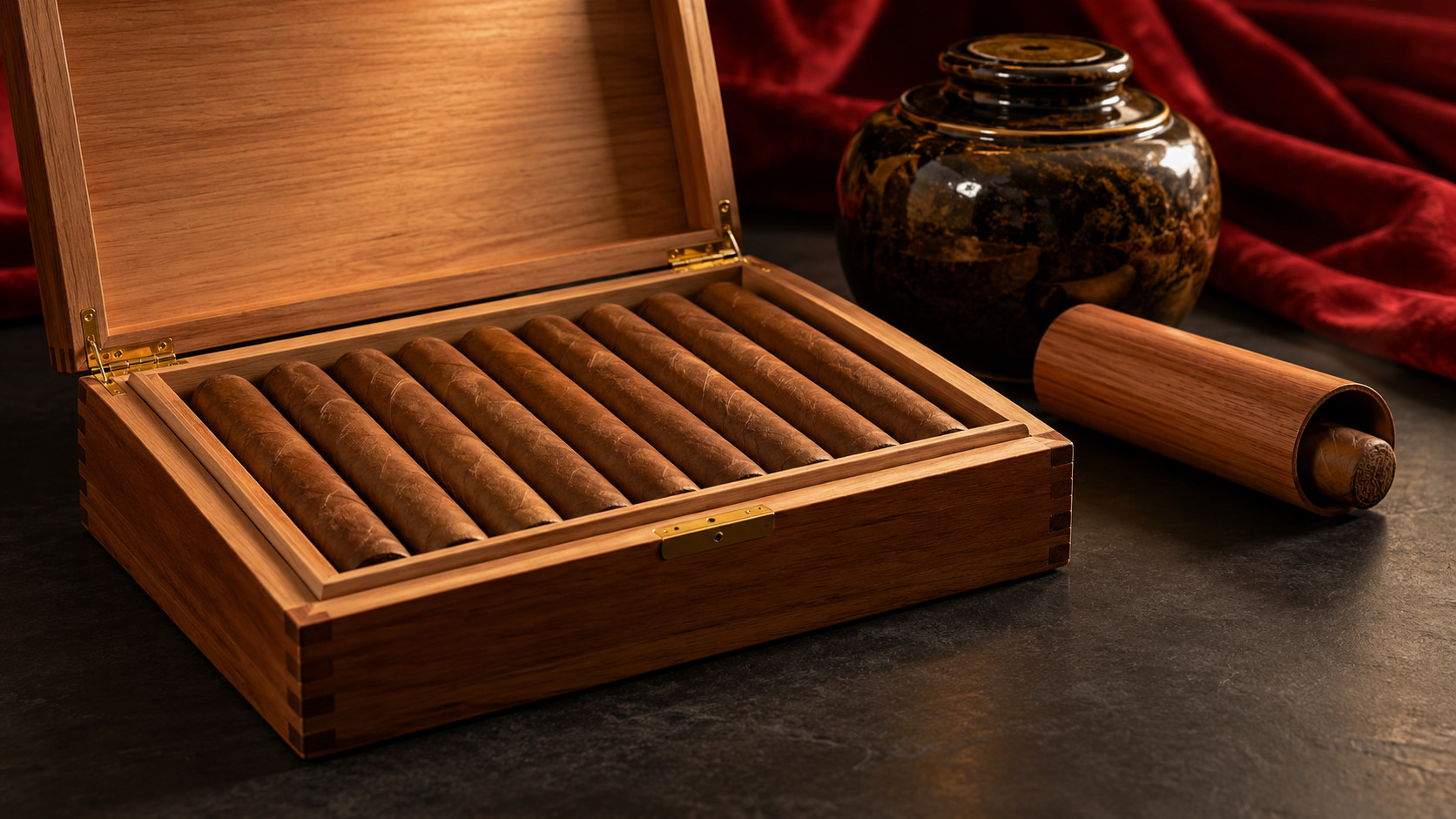
For hosts thinking through the practical side, our guide to choosing the right cigar rolling package covers guest counts, timing, and setup, and our about us page explains the tradition behind the bench. If you would rather bring the cigars yourself, the RTS Cigars shop ships every order free, and the Super Premium Collection arrives hand packed in a handcrafted cedar box, which happens to be the most elegant way anyone has found to hand someone a cigar without saying a word about it.
For adults 21+ only. RTS Cigars products are intended for adults of legal purchasing age.
It depends entirely on the shop. Some prohibit outside cigars, some allow them for members only, and many permit them for a cutting fee commonly between five and fifteen dollars per cigar. Ask at the counter when you arrive rather than assuming, since no lounge posts the policy.
A cutting fee is a charge some lounges apply when you smoke a cigar you did not buy there. It compensates the shop for the seating, ventilation, and service you are using, and it is a fair resolution of what used to be an unspoken grievance between shops and customers.
A cigar goes out on its own within a few minutes if you simply set it down. Crushing it ruptures the wrapper and releases a strong, unpleasant odor that fills the surrounding area. Leaving it to rest in the ashtray is both the traditional practice and the considerate one.
Asking is generally fine and often welcome. Touching, holding, or asking to smell another person’s cigar is not. If you are curious, ask the counter to show you the same cigar from the humidor rather than reaching toward someone else’s.
In a lounge with beverage or table service, standard hospitality tipping applies. In a retail lounge with no service, tipping is not expected, though regulars often take care of staff around holidays or when someone has gone out of their way to help.
Most lounges are come as you are, though hotel and club lounges may hold a dress code. The more practical consideration is fabric, since smoke settles into wool and knitwear and lingers for days. Many regulars keep a dedicated jacket for exactly this reason.
Either is acceptable and neither is a rule. Some smokers remove the band once the cigar warms enough to loosen the glue, and others leave it on for the whole smoke. The only real risk is tearing the wrapper by pulling a band off while the cigar is still cold.